Kremlin Confirms Restart of Ukraine Peace Talks for November
Vladimir Putin has agreed to restart direct peace negotiations with the U.S. and Ukraine in November, marking a critical pivot in the war's diplomatic trajectory.
By Ama Boateng ·
Ordinary citizens in Europe and beyond may soon see a shift in the diplomatic landscape as Russia formally agreed to resume direct negotiations with the United States and Ukraine. This development, confirmed by Kremlin officials on Wednesday, paves the way for the first three-way talks since February, potentially offering a new path toward ending the conflict that has persisted for over four and a half years. The agreement signals a tentative thaw in relations, moving the process from stalled impasse to active engagement in the coming weeks.
The decision was reached following a high-level meeting between Russian President Vladimir Putin and U.S. envoy Steve Witkoff in St. Petersburg. According to Yuri Ushakov, Putin’s foreign affairs adviser, the Russian leader agreed “in principle” to restart the dialogue after November 10. The primary objective of these upcoming sessions is to construct a post-conflict security framework for both nations. This diplomatic push comes as U.S. President Donald Trump intensifies pressure on Kyiv to secure a deal that halts the fighting, a stance that has drawn both support and scrutiny from various international stakeholders.
Ukrainian President Volodymyr Zelenskyy expressed backing for Washington’s initiative to accelerate the peace process. In an audio message released late Wednesday, Zelenskyy stated that the agenda is straightforward: end the war, bring peace closer, and prepare for a potential meeting between the leaders. However, he offered a cautious outlook, noting that while Russia has repeatedly expressed readiness to meet, previous attempts were often canceled. “We’ll see what happens this time,” Zelenskyy remarked, underscoring the fragility of recent diplomatic efforts.
The resumption of talks follows a period of limited progress. Earlier this year, representatives from the three nations met in Abu Dhabi and Geneva, yet little was achieved beyond prisoner exchanges. Moscow maintained its core demands, and Kyiv held firm on its own. Ushakov characterized the proposals emerging from a recent meeting in Oslo as containing “little of real value,” though he later softened this stance on Russian state television, describing them as a step in the right direction despite Moscow not being “fully satisfied.”
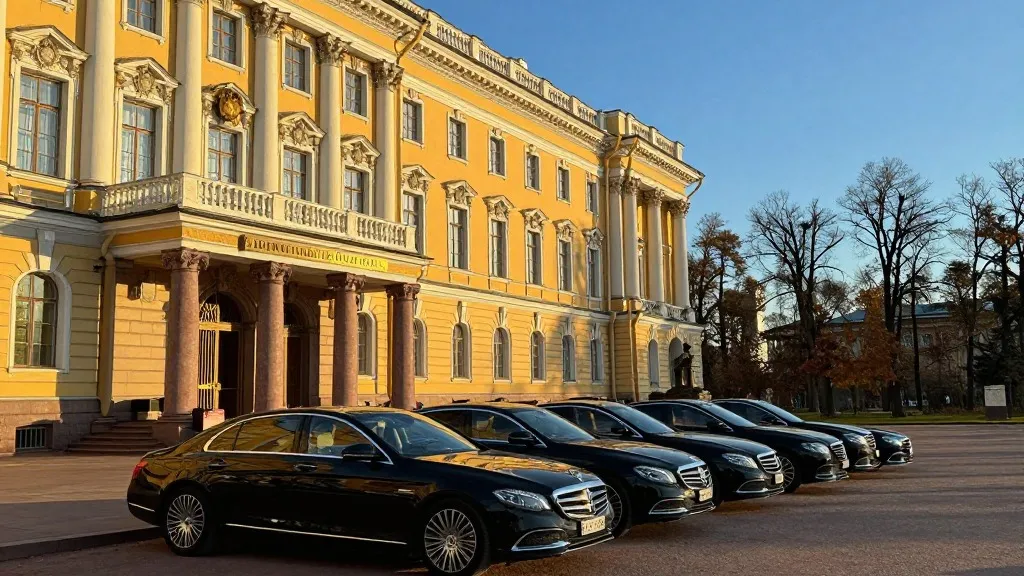
The St. Petersburg discussions, which lasted approximately three hours at the Constantine Palace, involved key figures including Ushakov, Russian presidential envoy Kirill Dmitriev, and Jared Kushner, who joined via video link. During the session, Witkoff and Kushner proposed a technical-level three-way meeting and shared updates from their prior discussions with Zelenskyy in Oslo. They also explored a postwar economic plan and European security arrangements, indicating a broad scope for the upcoming negotiations.
In a notable display of goodwill, Russia released Stephen Hubbard, a retired American teacher who had been imprisoned on mercenary charges. Witkoff suggested this move was a gesture prompted by Trump’s request to Putin. Additionally, Putin indicated readiness to consider restoring economic ties with the U.S. and to discuss the U.S.-led conflict with Iran, suggesting a broader strategic dialogue beyond the Ukrainian front lines. Ushakov noted that large-scale joint economic projects between Russia and the U.S. were discussed in detail, with some nearing the implementation stage.
Norwegian Prime Minister Jonas Gahr Støre, who met with Witkoff in Oslo after his Russian trip, suggested the region may have entered a “new phase” of diplomacy. He predicted the new talks would likely occur in mid-November and offered insight into the complex issue of borders, stating that while Ukraine might not formally accept the current front line as the new border, it may learn to live with it. Støre’s comments highlight the pragmatic calculations now guiding the peace process.
Amid the diplomatic shifts, the military reality remains harsh. Overnight Russian attacks on Kyiv left three people dead and 12 wounded, damaging ten residential buildings. In Kharkiv, drone strikes in a residential area killed two people and injured 11 others. Ukrainian Prime Minister Serhii Koretskyi confirmed that energy facilities in four cities were targeted. Meanwhile, the Russian Defense Ministry reported intercepting 373 Ukrainian drones over multiple regions and the Black Sea, illustrating the continued intensity of the conflict even as diplomatic channels reopen.
President Trump, who has recently seen his relationship with Zelenskyy sour, continued to press for a compromise. Speaking from the Oval Office on Tuesday, he warned that if a deal is not reached, “it’s going to be a very bad thing,” citing the significant support the U.S. has provided to Ukraine. Zelenskyy responded by noting that Kyiv is once again receiving early warnings about incoming missiles, a sign of renewed cooperation with allies despite the tense political backdrop. The coming weeks will determine whether these diplomatic breakthroughs translate into tangible progress on the ground.
Source: Atlanta News First