Amazon's AI Retreat: Loudoun County Swap
The tech giant abandons four data centers in Northern Virginia to build homes and an arts center after local pressure over power and noise.
By Rahul Mehta ·
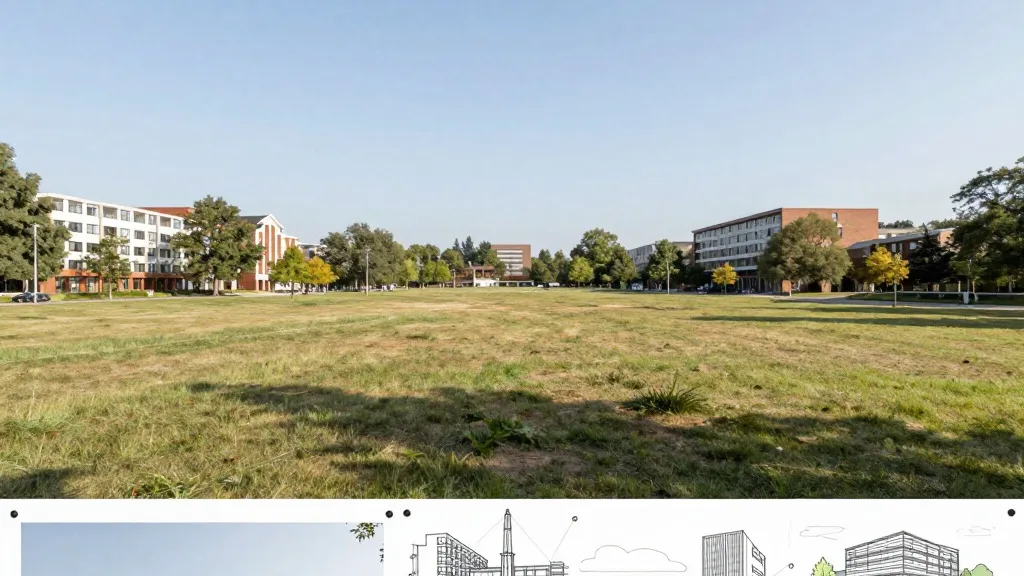
Amazon has officially scrapped plans to construct four new data centers on a 122-acre site in Loudoun County, Virginia, marking a significant shift in the company's regional infrastructure strategy. The decision replaces the planned AI facilities with mixed-use and residential development, a move driven by intense local opposition and changing county policies regarding energy consumption. This withdrawal occurs just weeks after Amazon submitted its original proposal in July, signaling a rapid response to community concerns about the environmental and logistical impacts of hyperscale computing.
The site in question is the former campus of George Washington University, located just outside Washington, D.C. While the county is already known as a major hub for data infrastructure, residents had grown increasingly wary of the sector's expansion. Key issues included the noise generated by cooling systems and the massive strain these facilities place on local power grids. The county's Board of Supervisors had recently shifted its stance, suggesting that alternative uses for the land might be more beneficial to the community than additional server farms.
Under the new agreement, Amazon will donate 25 acres of the property to Loudoun County. This land will be developed into a community arts center and a new recreational facility. Additionally, the company has committed a $5 million contribution to the county's housing fund. These concessions are designed to address the specific complaints raised by locals, who argued that the area could not support further heavy industrial energy loads without significant upgrades to its grid capacity.
Josh Weissman, Amazon's vice president for data center development, explained that the company was initially eager to secure the former university campus when it became available. However, he acknowledged that the company listened to the county's "pointed concerns" about building at this specific location. Weissman noted that while Amazon and the county had different views on the legal development potential of the land, they agreed that a shared vision was preferable to "costly litigation." This diplomatic resolution allows Amazon to maintain good standing with local officials while pivoting its immediate land use strategy.
The broader context of this decision involves the rapid growth of artificial intelligence, which has spiked demand for larger and more powerful data facilities. This surge has put pressure on local resources, including electricity and water. In response, federal attention has turned to how these costs are distributed. President Donald Trump recently urged data center builders and AI companies to share the burden of energy price increases with local communities. He proposed that these facilities should not only generate their own power but also sell excess energy back to the grid, a policy direction that aligns with the concerns raised in Loudoun.
Phyllis J. Randall, chair of the Loudoun County Board of Supervisors, framed the outcome as a success for collaborative governance. In a statement, Randall said that choosing "dialogue over reflexive disagreement" created a unique opportunity for the county. She emphasized that the new plan will provide spaces for residents to gather and create, while also making it possible to build more attainable homes for working families. This highlights a growing trend where local governments leverage their land-use authority to negotiate better terms with tech giants.
The deal effectively transforms a potential industrial expansion into a community development project. For Amazon, it avoids the friction of a contested permitting process in a politically sensitive area. For Loudoun, it secures tangible assets for its residents without the long-term uncertainty of hosting four new high-power facilities. The agreement illustrates the evolving relationship between hyperscalers and the communities that host their infrastructure, where local input is increasingly shaping global tech buildouts.
Observers note that this outcome may set a precedent for other regions facing similar infrastructure bottlenecks. As the demand for AI computing power continues to grow, companies may find that securing land is only the first step. Navigating local sentiment regarding energy and environmental impact is becoming a critical factor in the economics of data center expansion. The Loudoun County model suggests that a flexible approach to land use can yield benefits for both the developer and the host community.
The transition of the site from a planned data center hub to a residential and cultural space underscores the complexity of modern infrastructure planning. While the core need for cloud storage and AI processing remains, the method of meeting that need is being refined. This development in Northern Virginia serves as a case study in how local pushback can influence national tech strategies, potentially slowing the pace of expansion in favor of more integrated community projects.
Source: Tom's Hardware