How the iPod Changed What You Could Carry in Your Pocket
The device's release in 2001 set a new standard for personal music by packing a massive library into a tiny frame.
By Anastasia Volkova ·
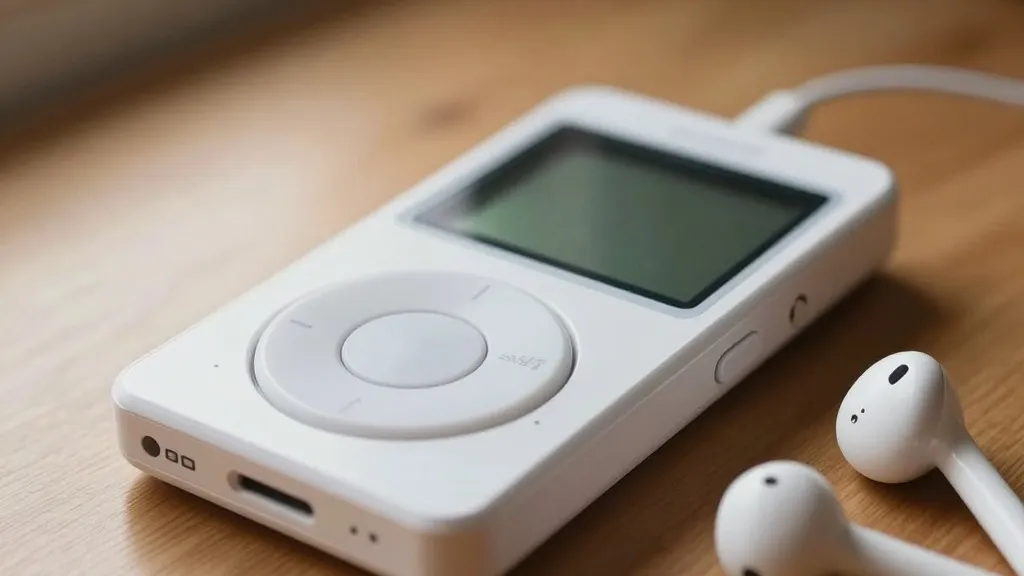
Twenty-five years ago, on October 23, 2001, Apple's presentation promised a new kind of device. The core idea was simple: carry your entire music collection in your pocket. This meant no more lugging around a stack of CDs or relying on a limited playlist from a flash player. Instead, you could have thousands of songs with you, ready to play at a moment's notice. The product that made this possible was the original iPod, a device that would become an essential companion for millions before smartphones took over that role.
At the center of the announcement was a direct promise from Apple CEO Steve Jobs. He stated that for $399, the iPod could put your whole music library into a portable device. He argued that no other company had yet figured out the right approach to digital music, even though players from Creative, Sonic Blue, and Sony were already on the market. Apple's entry into the category was a hard-disk based player, a choice made to maximize storage capacity. This allowed the device to hold 5GB, which Apple calculated was enough for 1,000 songs.
The physical design was a key part of its appeal. The iPod was about the size of a deck of cards, measuring 2.4 by 4 by 0.78 inches and weighing 6.5 ounces, which Jobs noted was 'lighter than most cell phones.' This small size was made possible by a 1.8-inch Toshiba hard drive that was just 0.2 inches thick. Jobs presented this compact form as the first of three main reasons the iPod would succeed, alongside its design and its integration with Apple's software.
The device's design featured a scroll wheel with tactile feedback, allowing users to quickly find a song, artist, or playlist with one hand. Alongside the hardware, Apple launched iTunes 2 on the same day. This software included a feature called Auto-Sync, which automatically kept the music library on a user's Mac in sync with the iPod whenever the two were connected. Jobs also emphasized the speed of the FireWire 400 connection, which he claimed could transfer an entire CD to the device in five to 10 seconds. In comparison, he stated that a USB connection would take around five minutes for the same task.
The original iPod also came with a rechargeable lithium-polymer battery that Apple said could provide 10 hours of continuous playback. The battery could be charged to 80% in one hour. Jobs presented these specifications as part of a complete package designed for convenience and ease of use, stating that Apple's 'legendary ease of use' was now available in a portable music player. He also noted the device could be used as an external hard drive for a Mac.
While the iPod was a significant product for Apple, the company's focus at the time was also on its computers. In 2001, Apple was in the middle of a transition to the Mac OS X operating system, with its iBook and iMac lines performing well for consumers. Jobs had predicted that the 'Mac could become the center of your digital lifestyle,' acting as a hub for digital cameras, camcorders, and other devices, including a portable music player. The iPod was introduced as part of this larger strategy.
The iPod's position in the market would eventually change. The first iPhone was released more than five years later in early 2007, and for over a decade, both devices were sold by Apple. The iPod's popularity declined as smartphones became more capable, and the final model, the 7th-generation iPod Touch, was released in May 2019. The product line was not updated after that, and it was officially discontinued by Apple in May 2022.
Source: Tom's Hardware